
Getting a flat tyre while driving in Auckland can be stressful, especially when you are travelling to work, picking up your family, or heading out on a long journey. A sudden tyre puncture can happen anywhere, from busy city roads and motorways to residential streets and car parks. Knowing what to do when a tyre goes flat can help you stay safe, avoid further vehicle damage, and get back on the road as quickly as possible.
Whether you are dealing with a slow puncture, a completely flat tyre, or a damaged tyre after hitting a pothole, the first priority is your safety. Once you are in a safe location, you can decide whether you need a spare tyre, roadside assistance, or a professional mobile tyre service in Auckland.
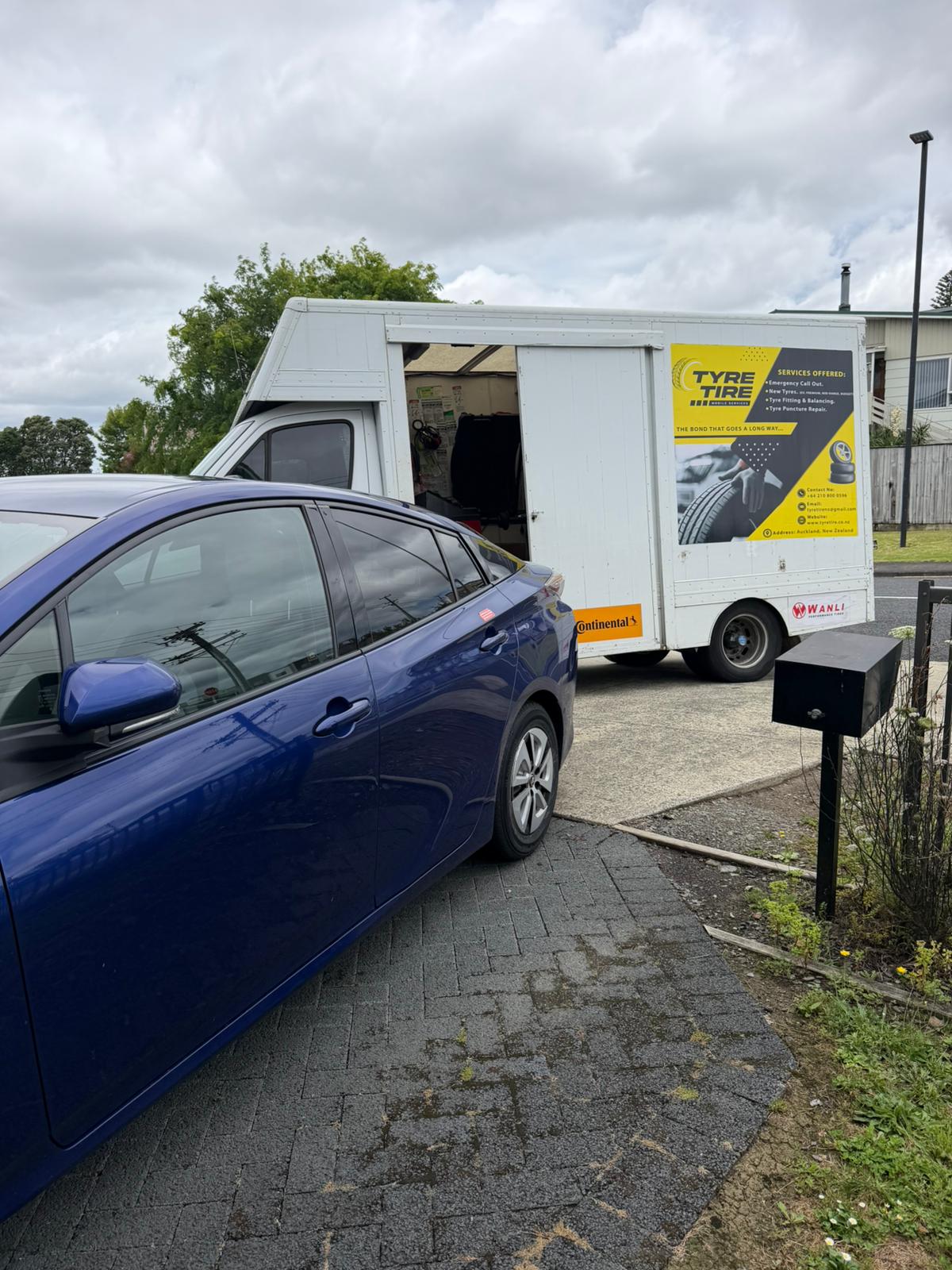
Tyre Tire helps drivers looking for convenient mobile tyre assistance. Instead of arranging transport to a traditional tyre workshop, you can enquire about having tyre services carried out at a suitable location, depending on availability and your specific requirements.
In this guide, we explain what to do if you get a flat tyre in Auckland, when to seek professional help, and how an emergency mobile tyre service can make the situation easier.
1. Stay Calm and Keep Control of Your Vehicle
The first few moments after discovering a flat tyre are important. You might notice your steering becoming heavier, the vehicle pulling to one side, unusual vibrations, or a flapping noise from a damaged tyre.
If you suspect a tyre has gone flat while driving, avoid sudden braking or sharp steering movements. Hold the steering wheel firmly and gradually reduce your speed while maintaining control of the vehicle.
Look for a safe place to stop, such as a suitable car park, service area, or other location away from moving traffic. Avoid stopping in a live traffic lane whenever possible.
If you are on a motorway or another high-speed road, follow the road authority’s safety guidance. Do not attempt to change a tyre beside fast-moving traffic. If the vehicle cannot be moved safely, contact the appropriate roadside assistance or emergency service.
Important: Never continue driving on a completely flat tyre unless a qualified professional or emergency guidance specifically advises you how to proceed. Driving on a flat tyre can damage the wheel, affect vehicle control, and increase the risk of an accident.
2. Find a Safe Place to Stop
Once you notice a flat tyre, finding a safe stopping location should be your next priority.
If the tyre still has some pressure and the vehicle remains controllable, move slowly towards a safe stopping area without making sudden movements. If the tyre has failed completely or the vehicle is difficult to control, stop as soon as you can do so safely.
After stopping:
- Switch on your hazard warning lights.
- Apply the parking brake.
- Turn off the engine when appropriate.
- Keep an eye on surrounding traffic.
- Exit the vehicle only if it is safe to do so.
- Keep passengers away from moving traffic.
If you are on a motorway, do not stand beside the vehicle in a dangerous position or attempt roadside repairs near passing traffic. Move to a safer area if it is accessible without crossing traffic, and contact the relevant assistance service.
Your safety is more important than protecting the tyre or reaching your destination on time.
3. Check the Tyre Damage Only If It Is Safe
Once your vehicle is parked safely, you may be able to make a visual assessment of the damaged tyre.
Look for obvious signs such as a nail or screw in the tread, a cut in the rubber, a bulge in the sidewall, or a tyre that has lost all its air. You may also notice that the tyre has come away from the wheel rim.
However, avoid crawling under the vehicle or putting yourself in an unsafe position to inspect the damage.
It is important to understand that not every puncture can be repaired. A small puncture in the appropriate area of the tread may be repairable, depending on the tyre manufacturer’s recommendations and the condition of the tyre. Sidewall damage, large cuts, severe internal damage, or damage caused by driving while the tyre was flat may require replacement.
Do not remove a nail or another object embedded in the tyre before a professional assessment. Removing it could cause the tyre to lose air more quickly.
If you are uncertain about the damage, contact a professional mobile tyre service in Auckland for advice.
4. Should You Change the Flat Tyre Yourself?
Some vehicles come with a spare wheel and the equipment needed to change a tyre. If you have experience, suitable equipment, and a genuinely safe place to work, changing a tyre yourself may be an option.
However, changing a tyre on the roadside is not always safe. Uneven ground, poor lighting, wet weather, passing vehicles, and a lack of suitable equipment can make the task dangerous.
Before attempting to change a tyre, consider the following:
- Is the vehicle parked on firm, level ground?
- Are you well away from moving traffic?
- Do you have the correct spare wheel and tools?
- Can you follow the vehicle manufacturer’s instructions?
- Can you safely position and operate the jack?
Never place any part of your body beneath a vehicle supported only by a jack. Never attempt a tyre change in a live traffic lane or another dangerous location.
If you do not have a spare tyre, lack the necessary equipment, or feel uncomfortable performing the repair, contact a professional for assistance.
A mobile tyre technician may be able to assess the damage and provide an appropriate repair or replacement at your location, subject to the service available.
5. When Should You Call an Emergency Mobile Tyre Service in Auckland?
A flat tyre can happen at inconvenient times, including early mornings, late evenings, weekends, or while travelling through an unfamiliar part of the city.
An emergency mobile tyre service in Auckland may be a practical option when you cannot safely continue driving and need professional assistance at your location.
You may want to contact a mobile tyre service if:
- Your vehicle has a completely flat tyre.
- You do not have a usable spare wheel.
- The tyre is visibly damaged and needs professional assessment.
- You are unable to change the tyre yourself.
- Your tyre has lost pressure while you are away from home.
- You need assistance at a suitable workplace, driveway, or other accessible location.
When contacting a service provider, explain what has happened and provide useful information about your situation.
For example, tell them your vehicle’s make and model, tyre size if known, your location, the type of damage you can see, and whether you have a spare wheel. Mention any urgent circumstances and ask about the estimated arrival time and total charges.
Not every mobile tyre provider offers round-the-clock emergency attendance. Always confirm operating hours, location coverage, response times, and availability before relying on a service.
6. How Tyre Tire Can Help With a Flat Tyre
When a tyre problem interrupts your day, convenience matters. Tyre Tire offers a mobile tyre service option for drivers seeking assistance without having to organise a trip to a conventional tyre workshop.
Depending on the service available, your vehicle’s requirements, and your location, mobile tyre assistance may help with tyre assessment, puncture-related needs, or replacement of a damaged tyre.
Here is how to make the process easier when contacting Tyre Tire:
Step 1: Explain the problem. Tell the team whether the tyre is punctured, completely flat, damaged on the sidewall, or losing pressure slowly.
Step 2: Share your location. Provide an accurate Auckland address or a safe, accessible meeting point.
Step 3: Provide vehicle details. Share your vehicle make, model, and tyre size if available. A photograph of the tyre can also help with an initial assessment.
Step 4: Confirm the service. Ask whether the required tyre, repair, or replacement service is available for your vehicle and location.
Step 5: Check the price and arrival time. Confirm the expected cost, any call-out fees, and the estimated arrival time before proceeding.
Contact Tyre Tire to discuss your tyre problem and find out what assistance is available for your situation.
7. How Much Does Emergency Mobile Tyre Service Cost in Auckland?
The cost of mobile tyre assistance can vary depending on several factors. These may include the tyre size, the type and brand of replacement tyre, the extent of the damage, the service location, and the time of the call-out.
A straightforward puncture assessment may involve different costs from replacing a damaged tyre. Emergency or after-hours attendance may also carry additional charges, depending on the provider.
Before confirming a booking, ask for a clear quote covering:
- The call-out or travel fee.
- The cost of a repair, if appropriate.
- The price of a replacement tyre, if required.
- Fitting and balancing charges, where applicable.
- Any additional emergency or after-hours fees.
Providing accurate vehicle and location information can help the service provider give you a more useful estimate.
Tyre Tire can advise you about the options available for your particular tyre problem when you make an enquiry.
8. Can You Drive on a Flat Tyre to the Nearest Garage?
In most situations, driving on a completely flat tyre is not recommended. Even a short distance can cause further damage to the tyre, wheel, and surrounding vehicle components. It may also compromise steering and braking stability.
Some vehicles have approved run-flat tyres that can travel a limited distance under specified conditions. However, the permitted distance and speed depend on the tyre manufacturer’s instructions, the vehicle, and the extent of the damage. Run-flat capability should never be assumed simply because the tyre has not come off the wheel.
If your vehicle has a tyre pressure monitoring system (TPMS), take a warning seriously. A warning light can indicate low pressure, but it does not necessarily tell you whether the tyre is safe to drive on.
When in doubt, stop in a safe place and arrange professional assistance rather than risking additional damage.
9. How to Prevent Flat Tyres in the Future
Although punctures cannot always be prevented, regular tyre maintenance can reduce avoidable problems and help you identify damage early.
Check tyre pressure regularly
Use the pressure recommended by your vehicle manufacturer, usually shown on the driver’s door placard or in the owner’s manual. Do not rely solely on the maximum pressure printed on the tyre sidewall.
Inspect your tyres
Look for cuts, cracks, bulges, embedded objects, and uneven tread wear. Have any concerning damage assessed by a professional.
Monitor tread depth
Tyres with insufficient tread can reduce grip, particularly on wet Auckland roads. Check tread depth regularly and replace tyres when required by New Zealand regulations and safety recommendations.
Avoid road hazards where possible
Potholes, sharp debris, and damaged road surfaces can cause punctures or impact damage. Slow down appropriately when approaching hazards, without making sudden movements.
Check pressure before long journeys
Correct tyre pressure can support handling, fuel efficiency, and tyre life. Check pressure when tyres are cold and follow your vehicle manufacturer’s guidance.
Know your spare tyre situation
If your vehicle has a spare wheel, check its condition and pressure periodically. If it uses a tyre repair kit instead, make sure you understand how it works and check its expiry date where applicable.
Routine maintenance cannot eliminate every tyre emergency, but it can help you spot issues before they become more serious.
Conclusion
A flat tyre in Auckland can disrupt your plans, but knowing how to respond can make the situation safer and less stressful. Slow down carefully, find a safe place to stop, assess the situation only when it is safe, and avoid driving on a completely flat tyre.
If you do not have a spare wheel or cannot safely change the tyre, a mobile tyre service in Auckland may be a convenient solution. For urgent tyre problems, contact an emergency mobile tyre service in Auckland and confirm its availability, response time, and charges.
Tyre Tire can be contacted to discuss your tyre issue and find out what mobile assistance is available for your location and vehicle. With the right support and regular tyre maintenance, you can get back to your journey with greater confidence.
Frequently Asked Questions (FAQs)
1. What should I do immediately if I get a flat tyre in Auckland?
Stay calm, hold the steering wheel firmly, slow down gradually, and stop in a safe location. Switch on your hazard lights and avoid driving on a completely flat tyre. If you cannot change the tyre safely, contact a roadside assistance provider or mobile tyre service.
2. Where can I find a mobile tyre service in Auckland?
You can search online for a mobile tyre service in Auckland and compare providers based on service coverage, available tyre options, response time, and pricing. Tyre Tire is an option to contact when enquiring about mobile tyre assistance.
3. Is emergency mobile tyre service available in Auckland?
Emergency mobile tyre assistance may be available depending on the provider, location, operating hours, and the type of vehicle. Contact the service directly to confirm whether it can attend your location and how quickly it can respond.
4. Can a mobile tyre service repair a puncture at my location?
In some cases, yes. A professional must assess the puncture, its location, and the tyre’s condition before deciding whether a repair is safe. Sidewall damage or severe tyre damage may require replacement instead.
5. How much does an emergency mobile tyre service cost in Auckland?
The price depends on the call-out fee, tyre size, repair or replacement required, travel distance, and any after-hours charges. Ask for a quote before confirming the service.
6. Can I drive with a flat tyre to a nearby garage?
Driving on a completely flat tyre is unsafe and can cause further damage to the wheel and vehicle. Stop somewhere safe and arrange assistance. If your vehicle has run-flat tyres, follow the manufacturer’s specific instructions.
7. Can Tyre Tire help if I have a flat tyre at home?
You can contact Tyre Tire to ask whether mobile assistance is available at your Auckland address. Share your vehicle details and tyre problem so the team can advise you about the available options.
8. How long does it take for a mobile tyre technician to arrive?
Arrival time depends on your location, traffic, technician availability, weather, and the time of day. Ask for an estimated arrival time when booking, particularly if you require urgent assistance.
9. What information should I provide when booking mobile tyre assistance?
Provide your exact location, vehicle make and model, tyre size if known, details of the damage, and whether you have a spare wheel. Ask about the estimated arrival time and the total cost.
10. How can I reduce the risk of getting a flat tyre?
Check tyre pressure regularly, inspect tyres for visible damage, maintain appropriate tread depth, and avoid road debris where possible. Before long trips, check the condition of your tyres and make sure you know what roadside assistance options are available.